LED Display Panel Price: What Drives Video Wall Cost
LED display panel price isn't one number. It's a stack of cost drivers: pixel pitch, brightness, IP rating, cabinet, refresh rate, control system. Here's how to compare video wall cost like an engineer.
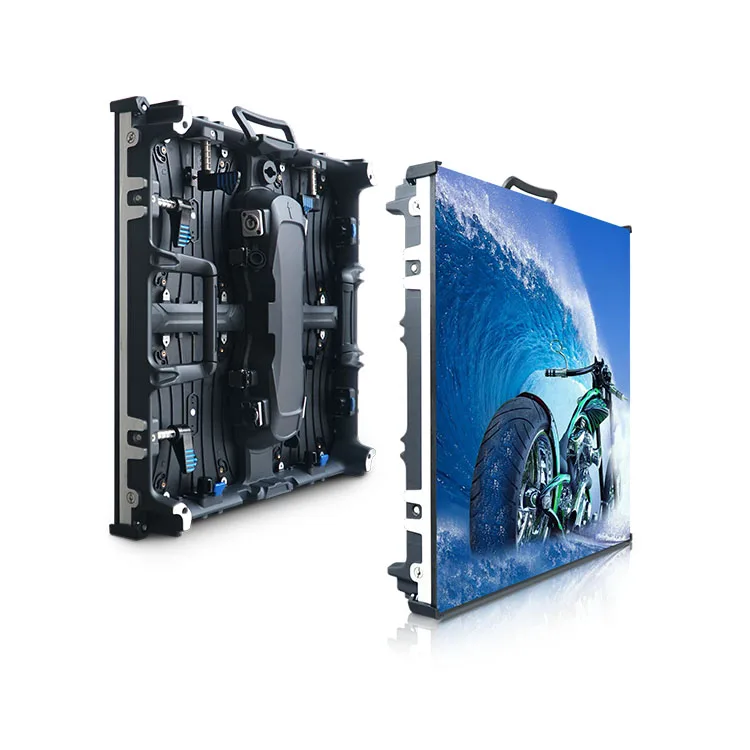
LED display panel price isn't a single number. It's a stack of cost drivers: pixel pitch, brightness, IP rating, cabinet, refresh rate, and control system. This guide explains each one so you can compare video wall cost like an engineer.
What actually drives LED display panel price
Pixel pitch is the main lever. It's the distance between the centers of two adjacent LED pixels in millimeters, per AVIXA's pixel pitch guide. Smaller pitch? More pixels per square meter. More LEDs means more cost. A 2mm pitch wall has a 2mm distance between adjacent pixel centers. That's a lot of pixels. A 4mm pitch has quarter the pixel density for the same area. So a P2 wall costs more than a P4 wall, all else equal.
Indoor vs outdoor is the second driver. Outdoor panels need higher brightness to fight sunlight, plus weather sealing. That changes the hardware: beefier LEDs, better heat dissipation, IP-rated enclosures. Our outdoor LED display series lists brightness up to 7,500 nits for some pitches. Indoor series run 800 to 1,200 nits. Higher brightness means higher power draw and more thermal management. That adds cost.
Cabinet material and size matter too. Die-cast aluminum cabinets are lighter and more precise than conventional steel or aluminum frames. But they cost more to tool and produce. Smaller cabinets give you more flexible installation and better flatness. You'll buy more cabinets per square meter though. Our outdoor series includes 500x500 mm die-cast cabinets and 960x960 mm conventional cabinets. The choice changes the price.
Refresh rate and control system are hidden costs. Higher refresh rate reduces flicker on camera. So rental and broadcast builds often spec 3840 Hz. That needs better driver ICs and a more capable control system. Receiving cards, sending boxes, and video processors are usually separate line items. Comparing quotes? Ask what's included. Some suppliers quote panels only. Others include the control system and spare parts.
Indoor vs outdoor: why the same pitch costs differently
Take a P3.91 panel. Indoors, it might run 1,000 nits and need only a light dust seal. Outdoors, the same pitch might need 4,500 nits and an IP65 front seal. The outdoor version uses more powerful LEDs, a sealed cabinet, better cooling. That's why the led wall price jumps when you move outside.
Our indoor LED display series shows brightness from 800 to 1,200 nits. No IP rating listed, because indoor panels don't need weather protection. Power consumption runs 175 to 230 W/m² average depending on pitch. The outdoor series lists 5,000 to 7,500 nits brightness and power from 200 to 450 W/m² average. Higher power means more electricity cost over time. It also may mean a dedicated circuit or upgraded electrical panel.
Thermal design is another cost. Outdoor panels in direct sunlight get hot. They need better heat sinks and sometimes active cooling. That adds material cost and weight. A heavier panel may need a stronger mounting structure. That adds to video wall cost. Indoors, you can often use a lighter wall mount or hang panels from a truss.
Typical applications: indoor P2 to P3 for close viewing in lobbies, control rooms, retail. Outdoor P6 to P10 for billboards and building facades where viewers are far away. Need a 10-foot viewing distance indoors? Don't buy a P10 outdoor panel just because it's cheaper. The image will look coarse up close.
Cabinet, module, and control system: the hidden cost layers
Cabinet size changes your bill of materials. A 500x500 mm cabinet gives fine granularity for odd wall sizes. But you'll need four cabinets for one square meter. A 960x960 mm cabinet covers nearly a square meter in one piece. Fewer seams, less wiring, but less flexibility. Our outdoor series includes both. The indoor series also lists 512x512 mm and 960x960 mm options.
Die-cast vs conventional cabinets is a real trade-off. Die-cast aluminum is milled to tight tolerances. Panels align better and the wall looks flatter. That matters for fine-pitch indoor walls. Conventional cabinets are usually welded or folded metal. Cheaper, but with more variance. For rental, die-cast is common because panels get banged around. For a permanent outdoor billboard, conventional may be fine.
Control system is a separate line item. You need a sending card or box, receiving cards in each panel, maybe a video processor. Some suppliers bundle these. Others quote them separately. If you don't ask, you might compare a screen-only price against a complete system price. That's a common mistake. Ask about spare parts too: receiving cards, power supplies, modules. For rental builds, flight cases are usually extra. Our rental LED display series lists cabinets that are 500x500x85 mm or 500x1000x85 mm.
How to read third-party LED price ranges without getting burned
You'll see led screen display price ranges online. But they're often screen-only. They don't include the control system, mounting structure, power distribution, installation labor. A published price per square meter might cover only the panels and maybe the receiving cards. Budgeting a full video wall? Add a significant margin for everything else. That's a rough figure, and it varies by project.
Some third-party sources publish price ranges. We don't publish prices, because every build is different. But if you see a price that seems too low, check what's included. Red flags: no mention of control system, no spare parts, no IP rating for outdoor, vague warranty terms. A low price may mean the supplier is cutting corners on LED quality or driver ICs. Ask for a detailed bill of materials.
Compare quotes on a like-for-like basis. List the pixel pitch, cabinet size, brightness, refresh rate, IP rating, control system, spare parts, warranty. If one quote is missing a line item, ask for it. Don't compare a P3.9 indoor panel quote with a P3.9 outdoor panel quote. They're different products.
One more thing: the Digital Signage Today pixel pitch guide says a smaller pitch increases pixel density and allows the image to resolve at a shorter viewing distance. So a P2 wall for a lobby costs more than a P3 wall for a stage backdrop. But the lobby wall will look sharper up close. Match the pitch to the viewing distance, not just to the budget.
What to send Hopestar for a real quote
We don't publish prices, because a useful quote depends on your configuration. Here's what to send us for a real quote:
- Pixel pitch (e.g., P2.5, P3.91, P6)
- Indoor or outdoor, and required brightness in nits
- IP rating if outdoor (e.g., IP65 front)
- Cabinet size preference (e.g., 500x500 mm die-cast or 960x960 mm conventional)
- Wall dimensions in meters (width x height)
- Refresh rate requirement (e.g., 1920 Hz or 3840 Hz)
- Control system preference (brand or features)
- Spare parts: how many spare modules, power supplies, receiving cards
- Target quantity (number of square meters or number of cabinets)
- Shipping terms (FOB, CIF, CFR, EXW)
Send that to us through the contact page, and we'll come back with a quote that includes the line items you asked for. That way you can compare our offer against others without guessing what's included.
Warranty, spares, and total cost of ownership
Hopestar offers a 3-year warranty on LED displays. That's longer than our 1-year warranty on LCD products. LED panels are expected to last. But warranty terms matter. Ask any supplier what the warranty covers: LEDs, driver ICs, power supplies, receiving cards. Some warranties cover only the LEDs, not the electronics. And ask about the spare parts policy. We recommend buying spare modules and power supplies with the initial order. They're cheaper then, and they reduce downtime later.
Our LED screens are tested and assembled twice before shipment. Packed in wooden or flight cases. That reduces shipping damage and ensures the panels work when they arrive. Every finished unit is inspected for appearance and function, using aging racks and other test equipment. That's part of our OEM/ODM process.
Total cost of ownership includes power consumption. A brighter outdoor panel draws more power. That adds up over years. Ask your supplier for power consumption per square meter at your target brightness. Calculate the annual electricity cost. It might change your pitch choice.
Spare parts strategy: for a permanent installation, we recommend buying a small percentage of spare modules and a few spare receiving cards. For rental, double that. Panels get handled more. Flight cases protect panels in transit, but they add cost and weight. One-off installs? You might skip flight cases and use wooden crates. Touring? Flight cases pay for themselves in fewer damaged panels.
At the end, the video wall price is not just the panels. It's the panels, control system, structure, installation, spares, and power over five years. A cheap panel with high power draw and no spares can cost more over time than a slightly more expensive panel with good support. We'd rather quote you a complete system with clear line items. So you know what you're buying.
Ready to get a real number? Send us your specs through the contact page. We'll respond within 24 hours. Tell us what you need, and we'll tell you what it costs to build it right.
Common questions
How much does a LED display cost?
It depends on pixel pitch, size, indoor vs outdoor, brightness, and control system. A screen-only price per square meter can mislead. For a real quote, send your specs to Hopestar. We'll itemize the cost.
What is the typical cost of an LED wall panel?
There's no single typical cost. A fine-pitch indoor panel costs more than a coarse outdoor panel. Third-party price ranges exist, but they often exclude control system and installation. Compare quotes on a like-for-like basis.
How much does an LED wall display cost?
The complete video wall cost includes panels, receiving cards, sending box, video processor, mounting structure, power distribution, and installation. Screen-only price isn't the same as system price. Ask for a detailed bill of materials.
What factors affect LED display panel price?
Pixel pitch is the biggest factor. Smaller pitch means more LEDs per square meter. Outdoor panels cost more due to brightness and IP rating. Cabinet material, refresh rate, control system, and spare parts also add cost.