RK3399 tablet: what this Rockchip platform still delivers
Specifying an RK3399 tablet for a commercial rollout? You need the real specs. The Android version ceiling. The PoE and NFC options. Get those before you commit. Here's what the platform actually gives you.
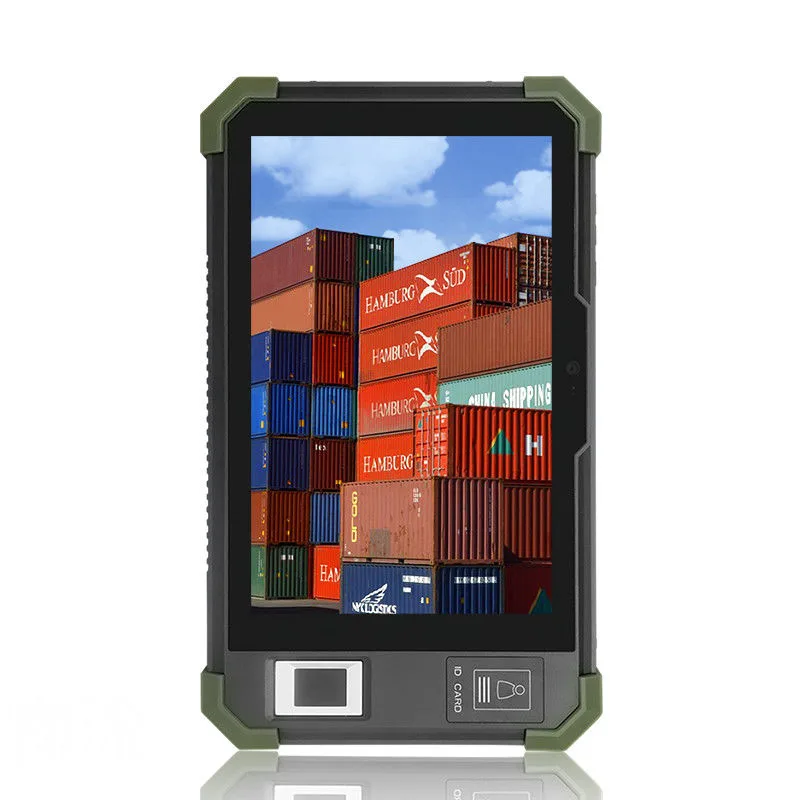
Evaluating an RK3399 tablet for commercial deployment? Benchmark scores don't matter much. What matters: does the platform support the display resolution you need? Do Android updates stop at a version your app still supports? Is PoE or NFC available on the specific model you're eyeing? We build hardware on this chipset. So let's walk through what it delivers, and where it stops.
What the RK3399 actually is (and what it is not)
Rockchip released the RK3399 on April 14th, 2016. The CPU uses a big.LITTLE layout: two Cortex-A72 big cores, four Cortex-A53 small cores, plus a quad-core Mali-T860 GPU. At launch, Rockchip said the GPU's overall performance was up 45% over the previous generation. That was a 2016 flagship. In 2026, it isn't the newest or fastest Rockchip platform. We won't pretend otherwise.
Fixed-function commercial work? It still does that well. The MIPI/eDP interface supports 2560x1600 and dual display. The HDMI 2.0 block handles H.265, H.264 and VP9 4K at 60fps decode and output. For a wall-mounted signage player, a kiosk controller, or an industrial HMI running one app full screen, that's enough. It also integrates dual USB 3.0 Type-C ports with DisplayPort output over Type-C. Have a second screen or a USB-C dock in your design? That matters.
What it isn't: a platform for the newest Android releases. And it's not a drop-in replacement for a modern application processor with a newer GPU. Plan around the ceiling. Don't plan against it.
RK3399 commercial tablet specs: screen, memory, OS
Typical RK3399 tablets in our line run 8 inch to 17.3 inch screens, with 2GB or 4GB RAM and 16GB or 32GB storage. Resolution options on our models include 1280x800 and 1920x1080. Android versions listed on RK3399 models include Android 7.1, 9.0, and some industrial designs ship Android 11. That matches what the chipset ecosystem offers. It's compatible with Android and Linux, but the Android version ceiling on RK3399 is lower than on newer Rockchip parts.
Our own RK3399 models show the range. The WL1589T is a 15.6 inch L-shape desktop with 2GB/4GB RAM and 16GB/32GB storage, plus PoE and NFC. The HP1733T is a 17.3 inch wall-mount with 1920x1080, 2GB plus 16GB, Android 7.1/9.0, and IEEE802.3at/af PoE as an option. On the rugged side, the HG805G is an 8 inch IP65 handheld with 3GB plus 32GB, Android 9.0, and optional 13.56 MHz NFC. The HGN801 is similar, but without the listed resolution.
Those are the specs we publish. If a cell is empty in our tables, we don't have a stated value for it. Treat it as unknown. Don't assume a default.
PoE, NFC and peripheral support on RK3399 tablets
PoE on our tablets follows IEEE802.3at/af where the model lists it. That's a per-model property, not a chipset property. The WL1589T lists PoE and NFC. The HP1733T lists IEEE802.3at/af as an option. Planning a wall installation without a local power run? Confirm the exact model supports it.
NFC at 13.56 MHz is a per-order option on our tablets, not standard fitment. Same goes for RFID, barcode scanner, fingerprint, 4G, and camera. The HG805G and HGN801 list 13.56 MHz NFC as optional. On the RK3399 platform specifically, you'll see PoE and NFC combinations on desktop and wall-mount models. But you have to ask for them at configuration time.
One more thing worth knowing. If your app relies on Google Play, Google Play filters apps using the uses-sdk attributes in the app manifest. An old Android version can shut you out of newer app builds. Google Play also has a target API level requirement, with an extension available to November 1, 2026 for apps that need more time. If your software vendor still targets an API level that runs on Android 9, you're fine. If not, you'll need to plan a migration.
Typical commercial use cases for RK3399 tablets
Digital signage and interactive kiosks are the natural fit. The chipset decodes 4K and drives dual displays, so a signage endpoint that plays a loop and handles touch input doesn't need more. Self-service terminals and retail come next. Order entry. Queue display. A customer-facing screen with a card reader attached over USB. Industrial HMI and control panels are the third category. The RK3399 is old enough that Linux and Android BSPs are well documented across the ecosystem, which shortens bring-up on custom hardware.
Where does it fit less well? Anything needing the newest Android release, a modern GPU for 3D-heavy UI, or a long field-life guarantee beyond the chipset's support window. For those, look at our newer Rockchip models. We also build rugged Android tablets and a broader Android tablet line if you want to compare form factors side by side.
RK3399 vs newer Rockchip chipsets: RK3566, RK3568, RK3576
This is the comparison most buyers ask for and few pages answer. Here's the honest version, based on what our spec tables list.
| Chipset | Typical Android version | Positioning | When it makes sense |
|---|---|---|---|
| RK3399 | Android 7.1 / 9.0, some Android 11 | 2016 flagship, dual Cortex-A72 plus quad Cortex-A53, Mali-T860 | Existing software stack, 4K decode, dual display, cost-sensitive projects |
| RK3566 | Android 11 | Newer quad-core, lower power | New designs that don't need RK3399's dual-display bandwidth |
| RK3568 | Android 11 | Newer quad-core, more I/O than RK3566 | Kiosks and terminals with several peripherals |
| RK3576 | Android 14 / 15 | Higher performance, newer GPU | New deployments that need current Android and a longer runway |
On our side, the WL1026T is a 10.1 inch RK3566 model on Android 11 with PoE and NFC. The WH1336T is a 13.3 inch RK3568 on Android 11. The WL1338T is a 13.3 inch RK3576S/RK3568 on Android 15. Those are the paths forward if you want a newer Android baseline.
One older note. You'll still see an rk3288 tablet in the field, like our HS-SHT1568 15.6 inch model on Android 8.1. The RK3288 is a generation behind the RK3399. We list it where it still fits a fixed-function job.
Lifecycle and availability: planning an RK3399 deployment in 2026
The RK3399 is mature. That's both the good news and the risk. Supply depends on Rockchip's long-term support for the part, and the Android version ceiling is lower than on RK3576 or RK3568. Deploying in 2026? Plan for firmware maintenance and spare units. Don't assume a decade of new OS releases. We publish no order minimums and no scheduling numbers, so ask for current availability when you request a quote.
What you can control is the software baseline. If you own the app, pin it to an API level that runs on the Android version you're shipping. If a third party owns it, get their roadmap in writing before you buy hardware. That's true for any platform, not just this one.
How to specify an RK3399 tablet with an OEM/ODM manufacturer
We make hardware: Android tablets, POS terminals and LED displays. We don't make the software or the platform. Android is Google's. The Rockchip BSP comes from the silicon vendor. Your application is yours. We can preload apps, set a custom launcher, change firmware defaults, and adjust the housing color, logo, manual, color box and carton under our OEM scope.
What we don't do: field service or software development. We also don't publish prices. Third-party market figures exist, but a real quote depends on the configuration, quantity and trade term.
Here's a short checklist of what to send us for a quote:
- Model or screen size and form factor (wall mount, L-shape desktop, rugged handheld)
- Chipset and Android version you need
- RAM and storage combination
- Resolution
- PoE yes/no, and which standard if yes
- NFC, RFID, barcode scanner, fingerprint, 4G, camera: which options
- OEM scope: logo, packaging, preloaded apps, launcher, firmware changes
- Quantity and target trade term (FOB, CIF, CFR, EXW)
Send that to our team through the contact page and we'll come back with a configuration and a quote.
Common questions
How many years does an Android tablet last?
No single number exists. It depends on the chipset's support window, the Android version ceiling, battery or capacitor aging, and whether your app still runs on the installed OS. For commercial deployments, plan for firmware maintenance and spare units. Don't assume a fixed lifespan. Ask any supplier for their support commitment in writing.
What is the best tablet for Kali Linux?
We don't make software or recommend distributions. The RK3399 is compatible with Linux as well as Android, and Linux support for the platform is documented in the ecosystem. Need a specific Linux build? Verify driver support for your chosen hardware before buying. We supply hardware. The OS choice and its support are yours.
What is the Android version ceiling for RK3399 tablets?
On our RK3399 models, listed Android versions are Android 7.1, 9.0, and Android 11 on some industrial designs. That's lower than newer Rockchip platforms like RK3576, which lists Android 14 or 15. Check the exact model's spec table. Then confirm your app's target API level against that Android version.
Can RK3399 tablets support PoE and NFC?
Yes, where the model lists them. PoE follows IEEE802.3at/af on models that state it, such as the WL1589T and HP1733T. NFC at 13.56 MHz is a per-order option, not standard. Same applies to RFID, barcode scanner, fingerprint, 4G and camera. Confirm at configuration time.